Our ICS group
We just formed our first farmer group!
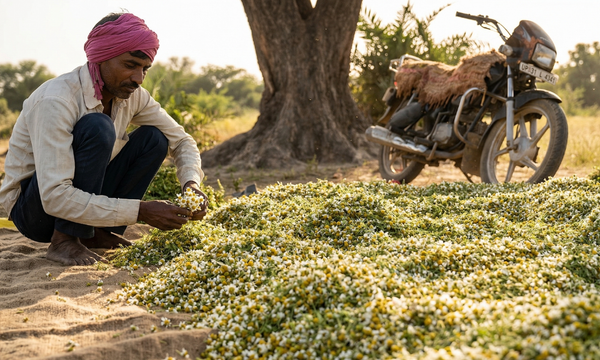
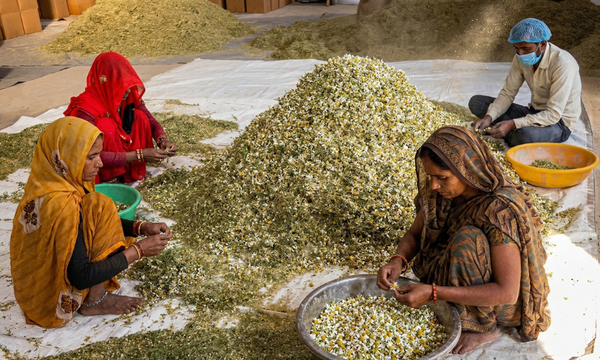
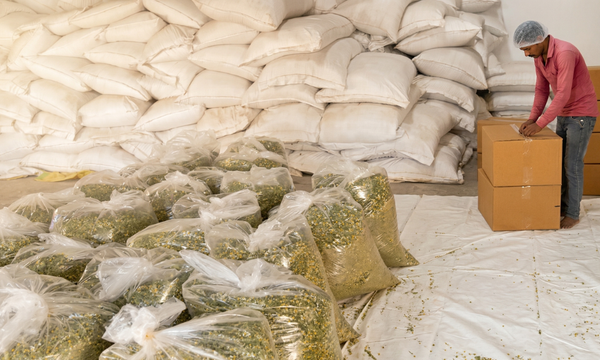
The chamomile was spread out on white tarpaulins. Men and women turning it by hand in the morning sun, spreading it thin so it would dry evenly. You could hear children playing somewhere in the back.
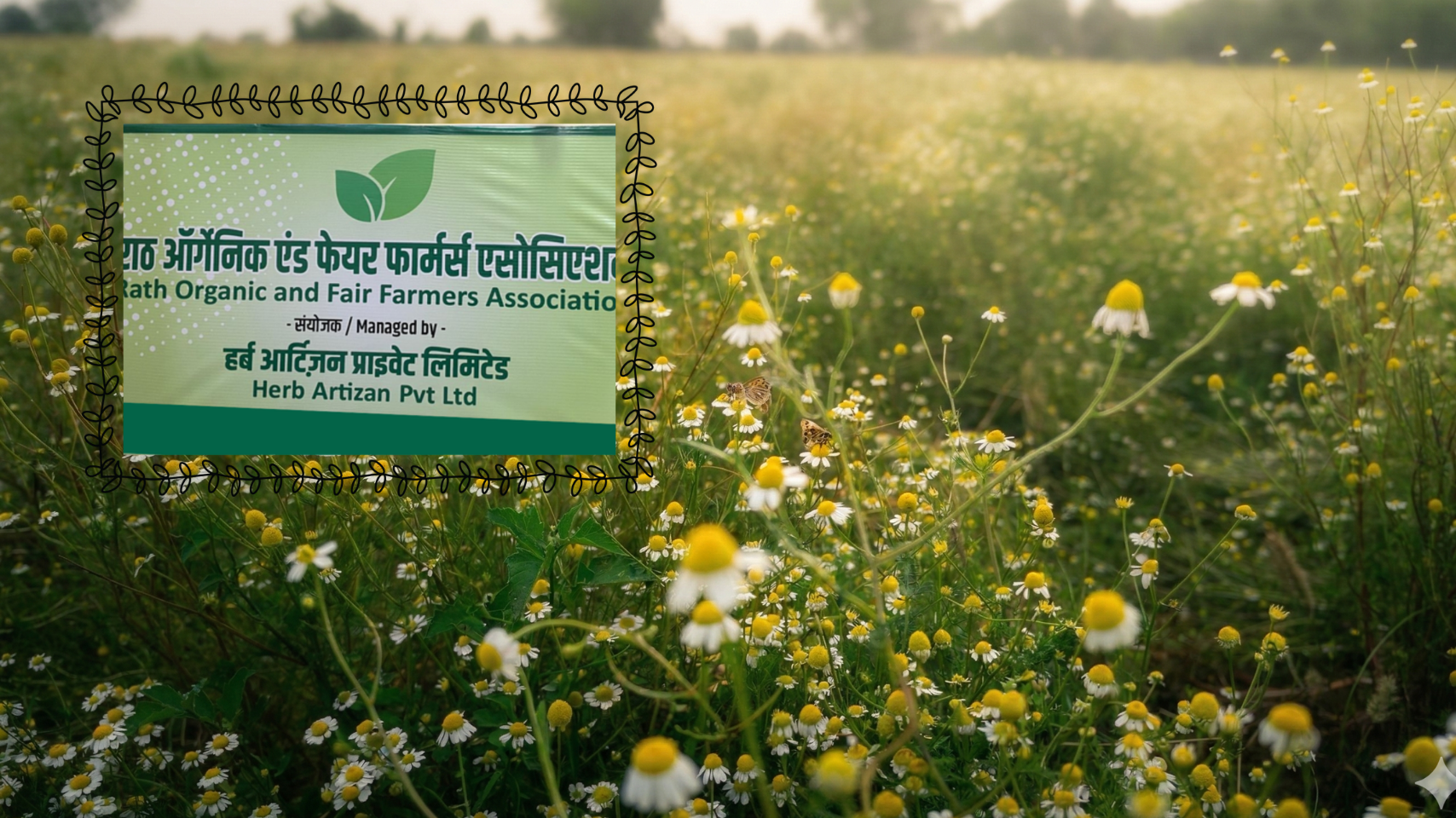
Last week, we formalized Herb Artizan’s first ICS (Internal Control System) farmer group in Uttar Pradesh and called it Rath Organic and Fair Farmers Association. There are 77 farmers with 73 acres of land. The group is growing Chamomile, Tulsi, Moringa, Rose, Lemongrass, and Peppermint, all of it in transition to certified organic.
We’re writing about this because we think the industry needs more honesty about what running a farmer group really involves, the weight of it, the ways it can break, and what it opens up if you do it right.
Why we built this
Organic certification doesn’t always mean the tests come back pesticide passing. Often pesticide residues turn up in batches with valid organic certificates. Supply chains are long, aggregation points are hard to see into, and passing an audit is a different thing from farming clean. There are also chances of pesticide drift from neighboring lands and contaminated water. We’ve been working around this problem for years. At some point the only answer was to stop depending on someone else’s word and build the system ourselves.
That’s what an ICS let’s us do. An Internal Control System lets a company certify a group of small farmers under one organic certificate rather than requiring each farmer to certify individually. Individual certification for smallholder farmers in India is too expensive and too complicated to work at scale. So the ICS shifts the responsibility inward: we do the inspections, we maintain the documentation, we verify compliance, and the certification body audits our systems.
The Responsiblility
An ICS puts us in a position most ingredient suppliers avoid. We’re managing the system that determines how our plants are produced not only buying at the end. That means the decisions we make have direct consequences for people who have very little margin for error.
The transition period is hard. Organic certification takes two years for NPOP and three years for NOP. During that time, farmers are paying more for organic inputs and getting lower yields as their soil adjusts, but they can’t sell at an organic premium because they’re not certified yet. If we don’t account for that gap in how we price and buy, farmers either leave the group or begin to cut corners. Most ICS integrity failures start here, during conversion, when the economics are the worst for the farmer.
Non-compliance is usually a knowledge gap, not fraud. The thing most people picture when they think about ICS failure is a farmer secretly spraying pesticides. That happens, not because they are dishonest, but because they don’t know an alternative, nor do we in a lot of cases… Also, a farmer may dry chamomile too long or not long enough because nobody explained how it affects the volatile oil content or how moisture can lead to microbial growth. Or they store material in a way that invites contamination because their storage options are limited. The failure is that the training didn’t connect practice to outcome.
The operator can become extractive without noticing. We set the standards. We decide what’s acceptable and what gets rejected. We control certification access. That’s a power position, and if we’re not careful, it turns into a system where information flows upward and value flows outward only. Farmers comply, but they don’t have a voice in how the system works. If the only feedback a farmer gets is “approved” or “rejected,” the relationship remains transactional.
Internal inspectors carry social weight. When we ask our internal auditor (a local from the village) to audit their neighbors’ farms, you’re asking them to operate honestly inside a community where everyone knows each other. Social pressure can be daunting. If an inspector reports non-compliance and that farmer loses income, the inspector carries that social weight. This is where systems can break. This is not because people are corrupt, but because the personal cost of honesty can be too high.
How we're trying to prevent this
We don’t have a perfect system. This is our first year. But the design choices we are making are intentional.
The field support role and the inspection role are held by different people. The person who works with the farmer to understand and train on growing, post-harvesting and storage practices is not the person who decides whether that farmer is compliant.
We are working out the price we should pay to cover the transition window. Farmers transitioning to organic are carrying extra cost with no premium yet. If we don’t bridge that, we’re pushing risk onto the people least able to absorb it. Our buy prices should account for this.
We treat non-compliance as a data point about where training is failing, not a reason to exclude someone. If a farmer’s drying practice is wrong, the question is: did anyone show them the right way and explain why it matters? If not, the failure is ours.
We’re building feedback loops. Farmer meetings where people can raise problems without judgement or penalty. We need to think about building a separate channels for grievances. Field team input into how standards are set. If information only flows upward, the system is blind to its own problems.
The Opportunities
Here’s where it gets interesting and where most industry conversation about ICS stops…
The ICS is a research operation, whether you design it that way or not. When you control the full chain from planting to storage, you get insights that you normally would not. How does harvest timing in Uttar Pradesh affect the apigenin content in chamomile? Is sun drying or shade drying preferred for the flavor of peppermint? Does the soil management approach on one set of moringa plots produce measurably different nutrient profiles than another? These are opportunities to learn and improve quality and consistency. We’re only at the beginning of collecting this kind of information. But the infrastructure is now in place to do it and that’s something a conventional sourcing relationship can never give you.
We can build standardized (POP) Packages of Practice. This is something our CEO, Dr Amit Agarwal has been talking about and wanting to do from a very long time. Once we understand (from real field data) the best way to grow, harvest, dry, and store each of these six crops in these conditions, that knowledge becomes codifiable. A set of documented best practices, built from on-the-ground experience, that we can share with other farmer groups who want to produce at the same quality level. One ICS group of a 77 farmers becomes the basis for a standard that could work across India. This is how we can engineer quality instead of waiting for it or having it by chance.
The ICS is the entry point for more certifications. We’re planning to bring this group through Fair for Life and Regenerative Organic Certified in the future. Each of those certifications requires the kind of ground-level documentation and farmer relationship that an ICS provides. Without the ICS infrastructure, the certifications aren’t always economically viable.
It changes the sourcing relationship. Most B2B herb sourcing is transactional. A buyer sends a spec, a supplier fills the order, a lab tests the result. The relationship is arms-length by design. Running an ICS means we know the farmers, we see the fields, we understand why a batch came out the way it did. When something goes wrong, we know where to look. When something goes right, we know why.
The SHI (Sustainable Herbs Initiative) talks about moving from transactional to reciprocal relationships where value and respect flow in all directions. An ICS, if you run it honestly, is one of the few structures that makes that real.
Where we are now
This is year one. We brought an existing, capable FPO under a formal ICS and started building the quality system around it. The farmers already know how to grow and process these crops. What we’re adding is the feedback loop connecting field practices to lab outcomes, and building the documentation.
We’ll get some things wrong. The first year of any ICS involves learning what you didn’t account for.
If you’re a tea brand or ingredient buyer and you care about knowing where your botanicals actually come from (the field, the farmer, the method) we’re open to that conversation. Contact sales@herbartizan.com.
Written by a member of the Sustainable Herbs Initiative Stewardship Counsil.
© Nikita Agarwal (PhD) 2026
Related Blogs

When the Soil comes back to Life
The science, economics, and common sense behind organic agriculture from farmers and agronomists who made the switch.

Chamomile Tea
The name “chamomile” has a fascinating origin that perfectly captures the essence of this beloved plant

Cinnamon Tea
Cinnamon has a rich history dating back thousands of years. The name “cinnamon” is

When the Soil comes back to Life
The science, economics, and common sense behind organic agriculture from farmers and agronomists who made the switch.

Our ICS group
The chamomile was spread out on white tarpaulins. Men and women turning it by hand in the

Chamomile Tea
The name “chamomile” has a fascinating origin that perfectly captures the essence of this beloved plant

Cinnamon Tea
Cinnamon has a rich history dating back thousands of years. The name “cinnamon” is