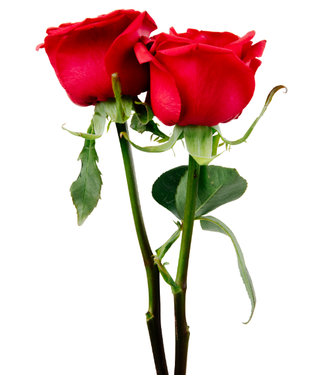
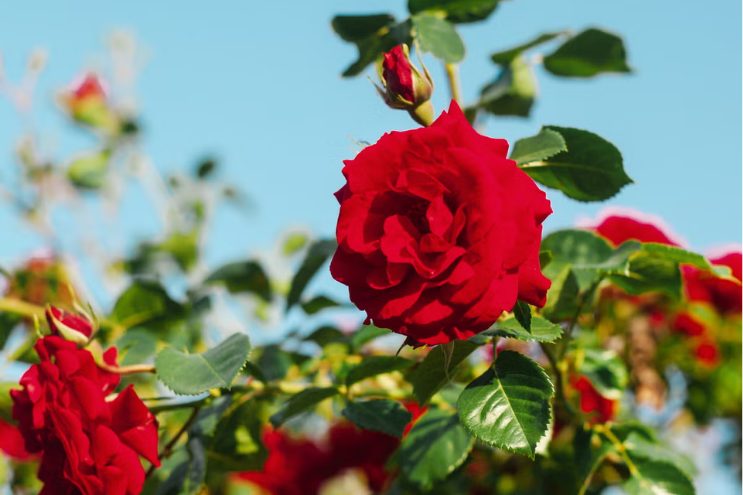
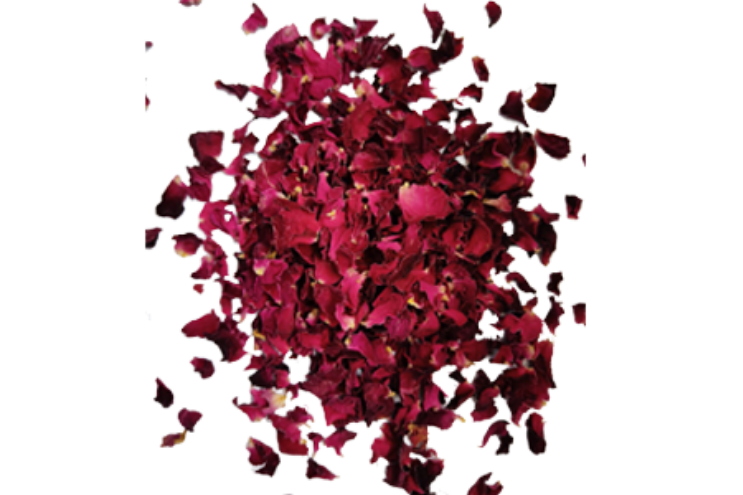
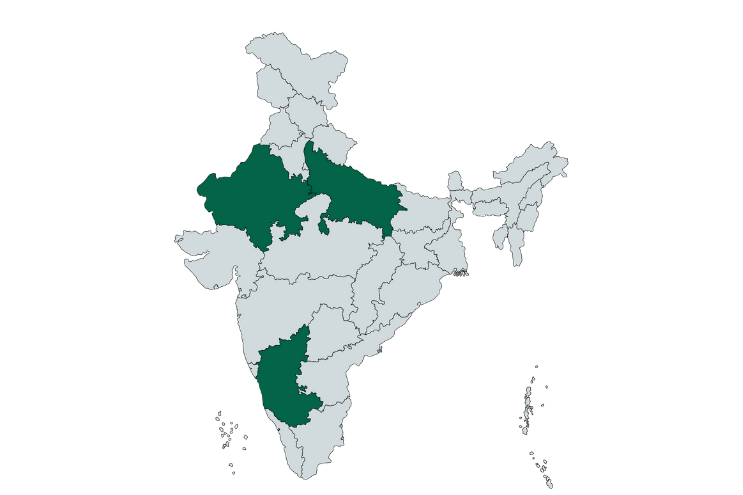
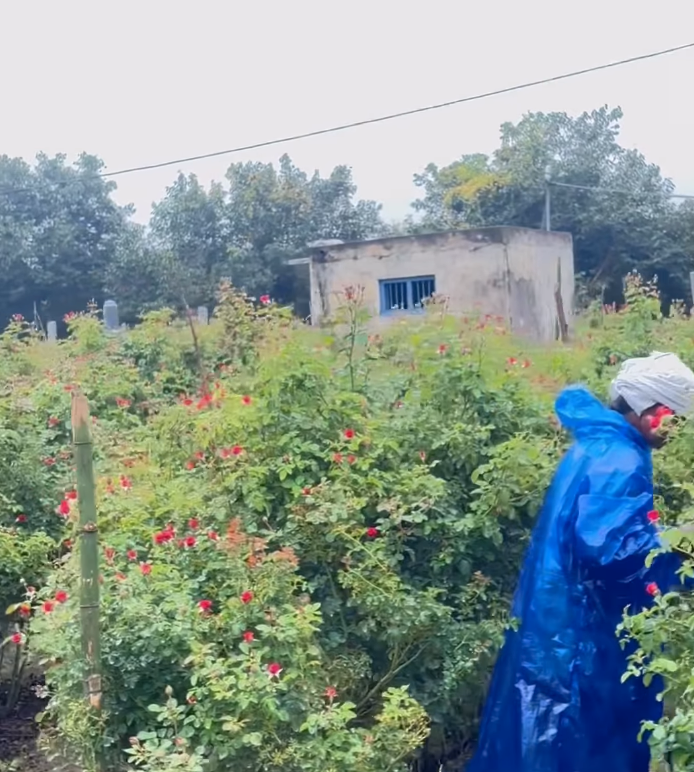
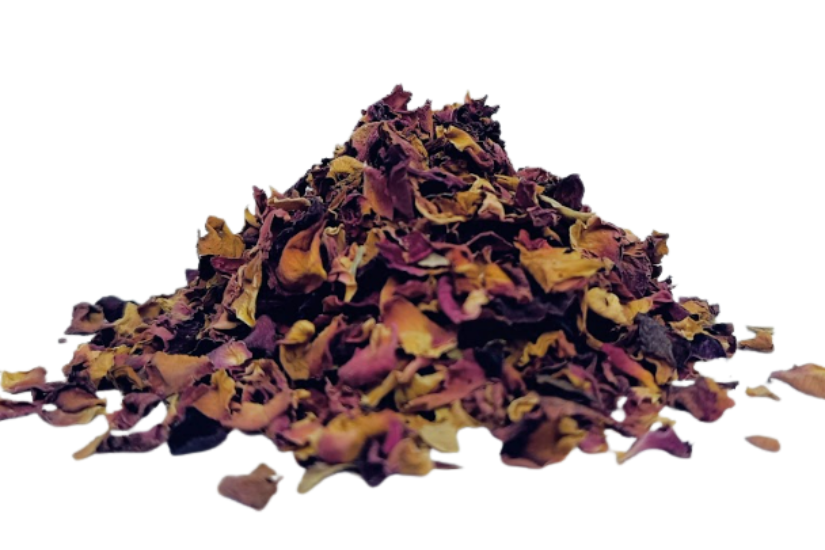
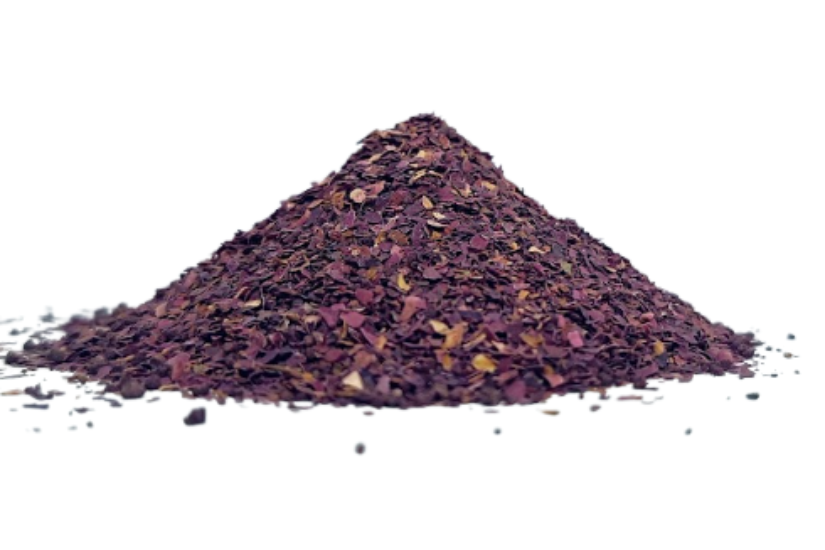
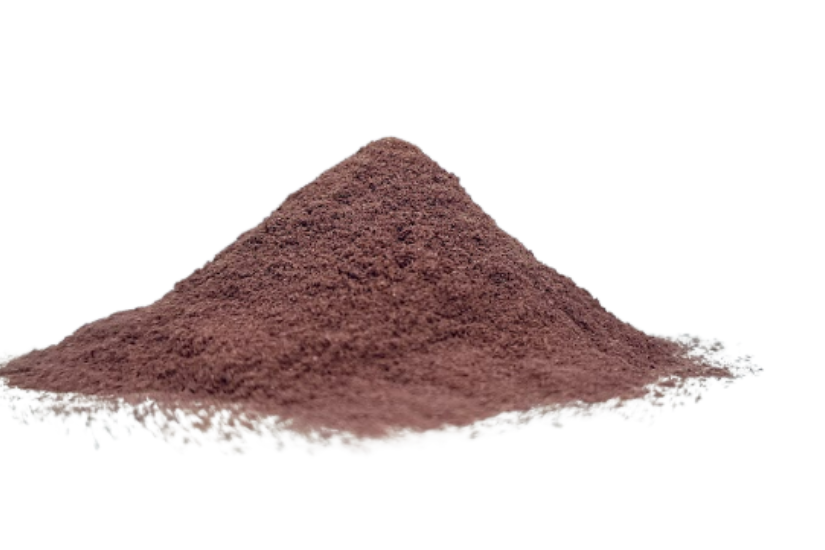
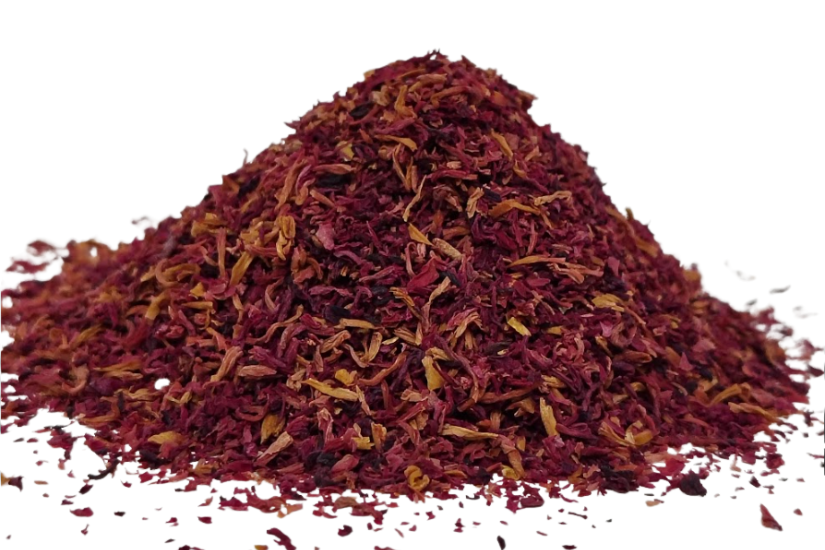
In India, Rose is primarily cultivated for perfumery and ornamental use. Petals are fragrant with notes of honey and fruit. Geraniol, citronellol, and phenethyl alcohol carry the aroma. Petals are used fresh, candied, dried, or distilled into traditional rose water and attars. Classic Indian foods like gulkand and desserts rely on consistent petal quality and clean processing. Color and aroma vary with region, season, and drying method. Distinguishing between rose species is challenging due to hybridization, morphological similarities, and environmental factors influencing their traits. Most cultivated roses are hybrids of multiple species, making exact classification difficult.

The rose is a perennial shrub that can remain productive for over 10 to 15 years. Fields are pruned annually to encourage flowering. The main harvest season is short, lasting 25 to 35 days, during which flowers must be hand-picked daily in the early morning. A mature acre can yield 1000 to 1200 kilograms of flowers. Roses are highly perishable, and flowers must be distilled within hours to capture their oil. Major challenges include high labor demand, thorns, susceptibility to pests and fungal diseases, and risks of pesticide residues if fields are not carefully managed.
From the fields where they’re grown to the shelves where you find them, every herb we use is traceable. Learn how we ensure quality, fairness, and sustainability in every step of the process from seed to ship.