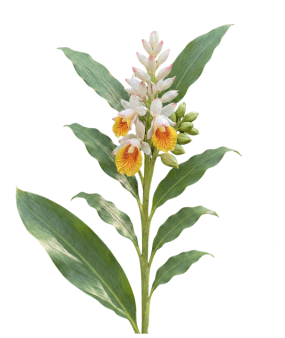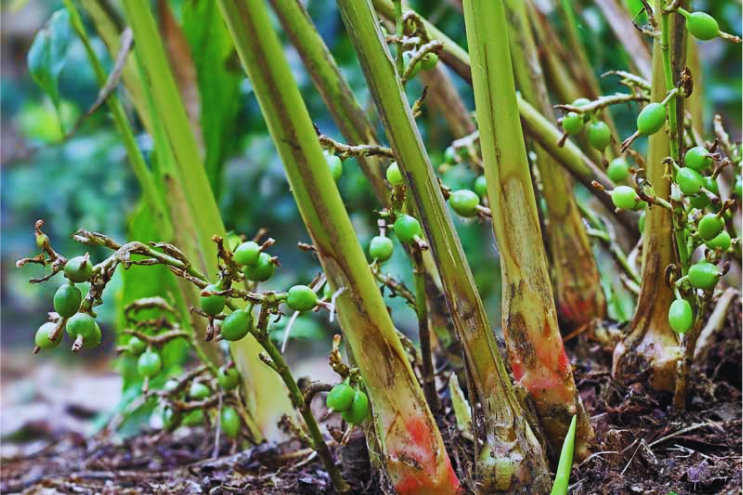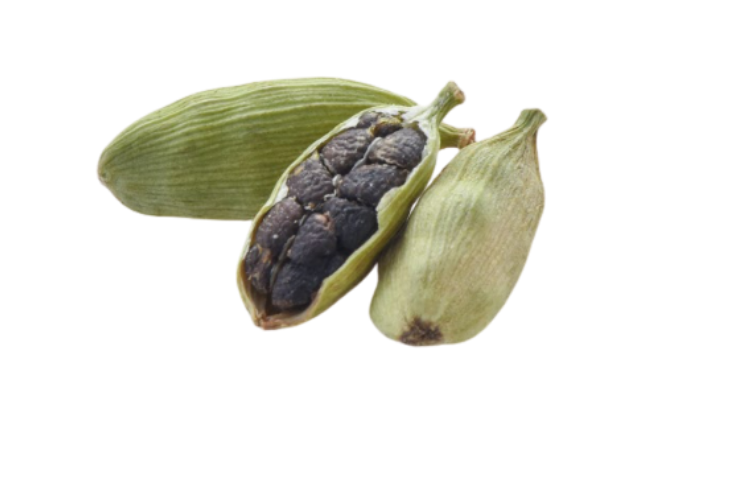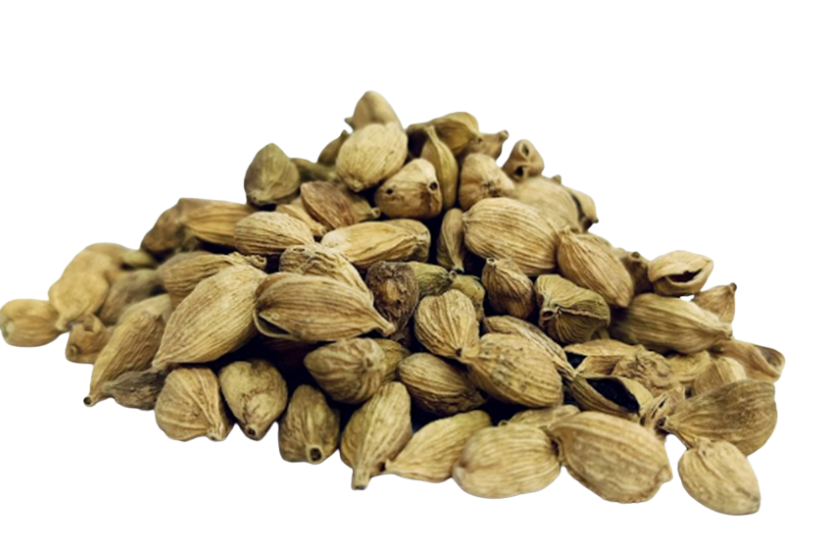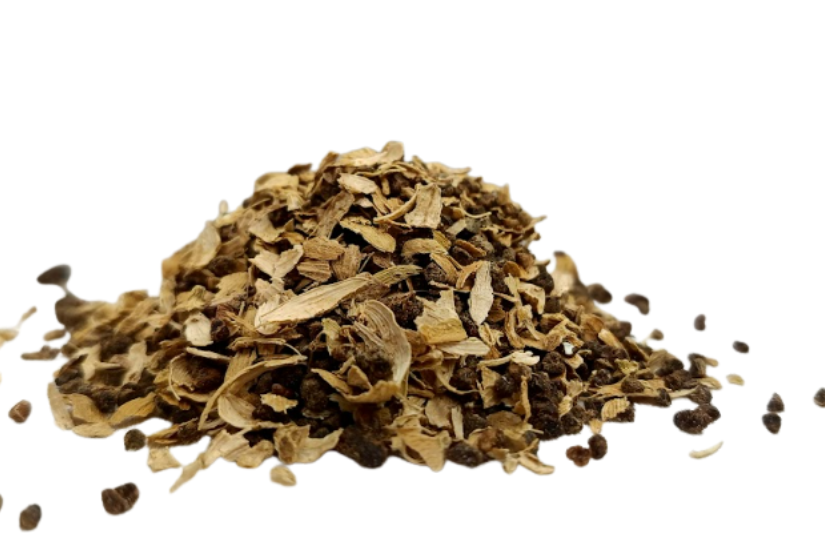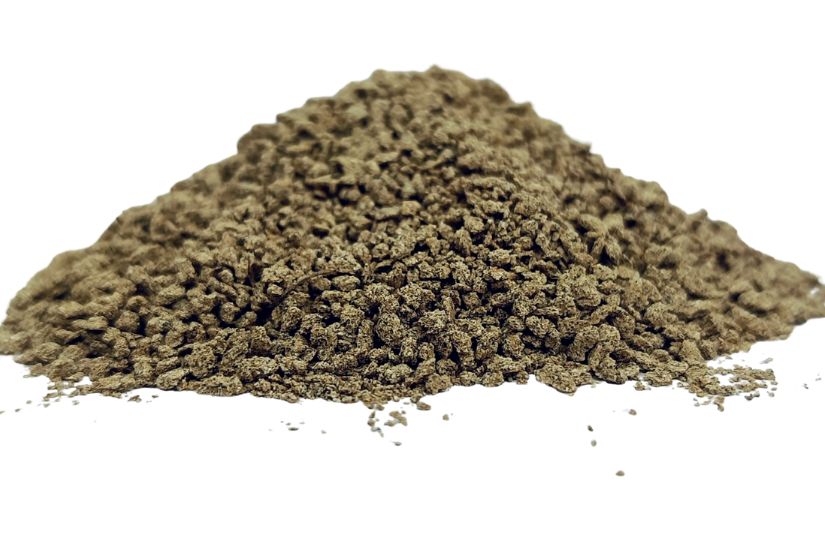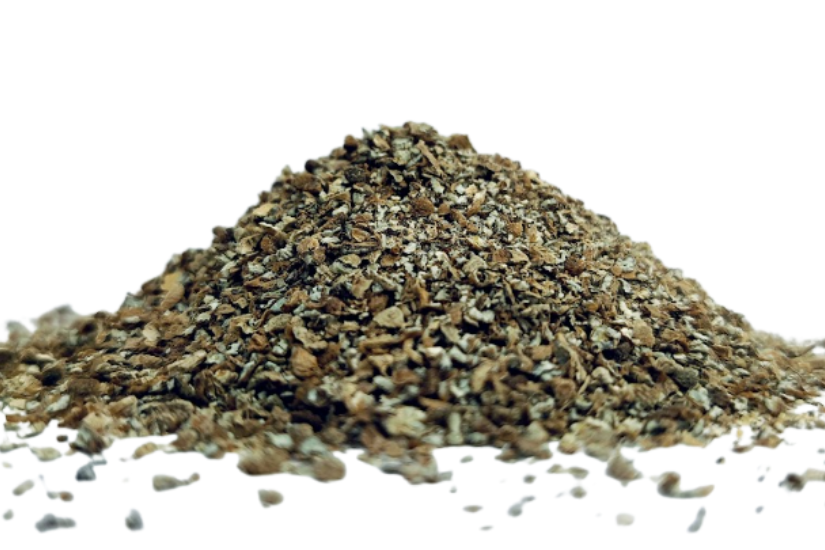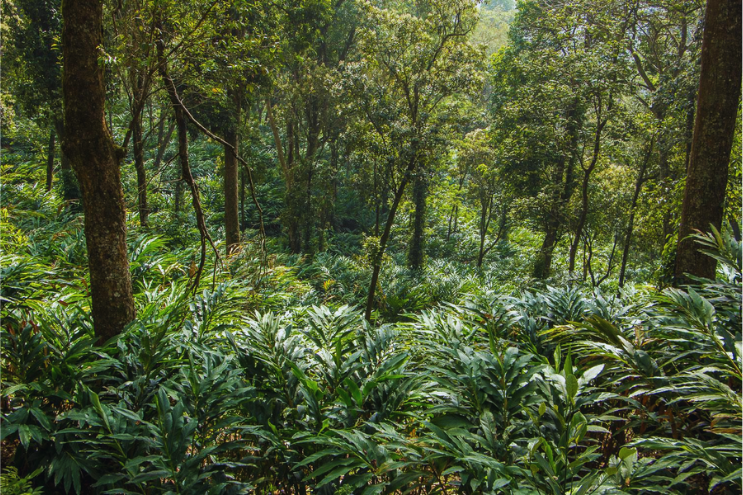
Small cardamom has a unique position in the international spices market. It is a native of the evergreen forests of the Western Ghats of southern India, which incidentally is also the centre of origin. The cardamom of commerce is the dried ripe fruit pods of cardamom plant.
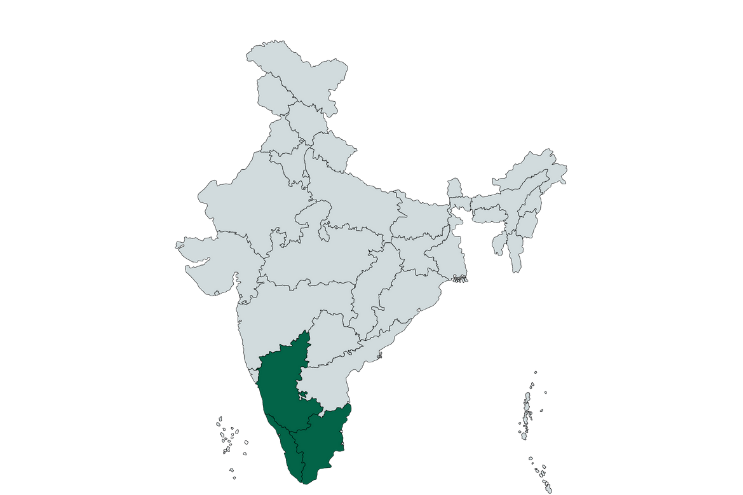
In India, cardamom is cultivated extensively in the hilly regions of southern states of Kerala, Karnataka and Tamil Nadu. Kerala accounts for 70% of the cultivation, followed by Karnataka (20%) and Tamil Nadu (10%).
It is a shade-loving (Sciophytes) plant growing under shade in evergreen forests. The plants mature in about 20-22 months after planting. Economic yield starts from the third year of planting and it continues up to 8-12 years for high-yielding varieties, depending upon the level of management.
Cardamom Diseases: Common diseases of cardamom in India include fungal diseases like Azhukal (Capsule Rot) and Rhizome Rot, viral diseases such as Katte disease (Mosaic) and Kokke Kandu, and Blight. These diseases cause significant crop loss by affecting leaves, capsules, and the plant’s root system, leading to symptoms like rot, yellowing, stunted growth, and mosaic patterns on the leaves.