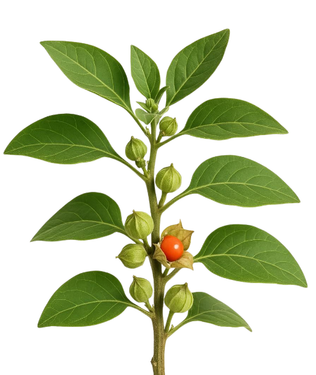
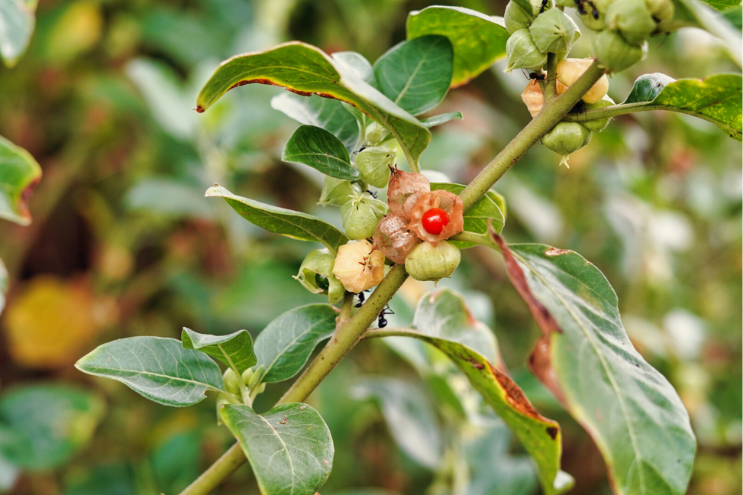
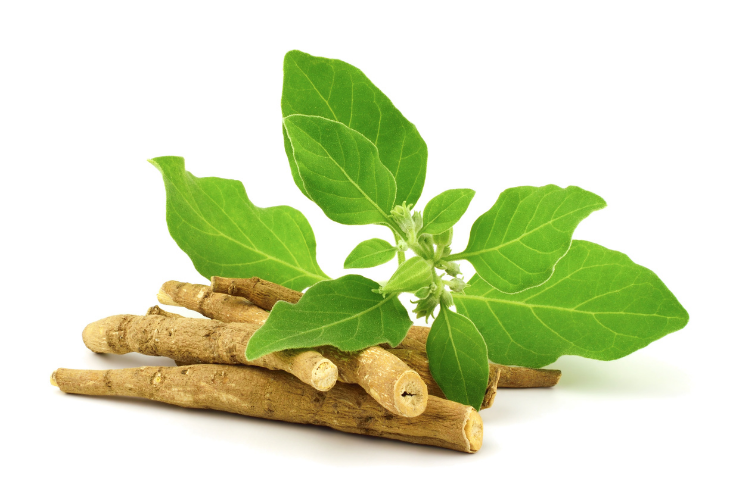
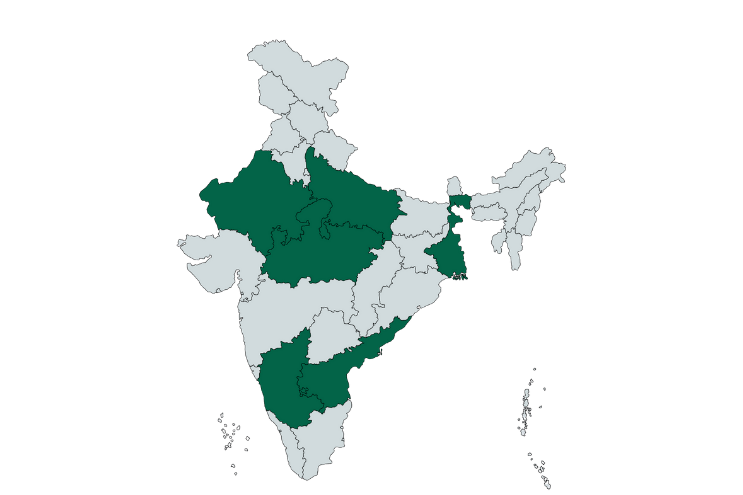
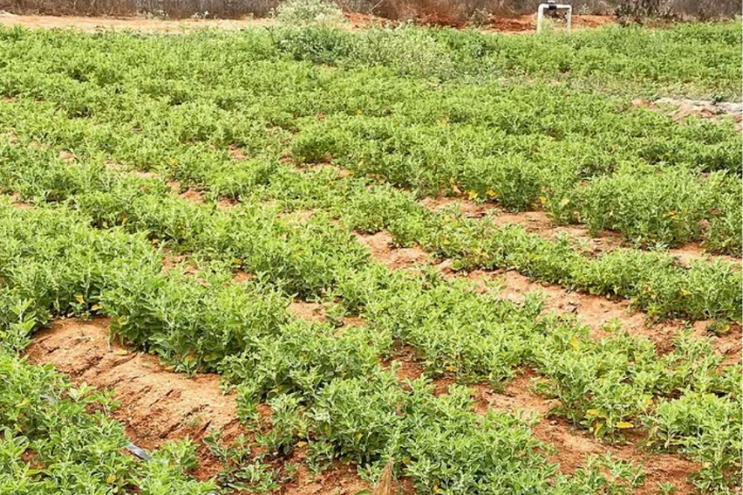
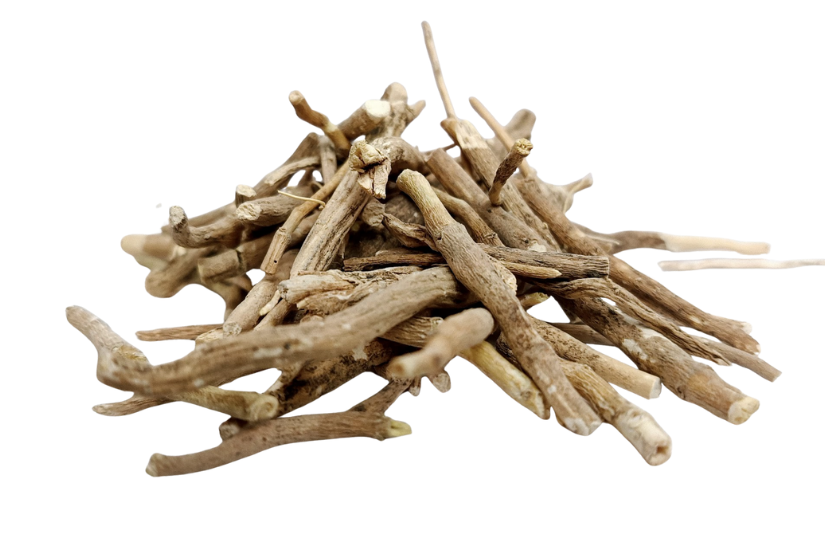
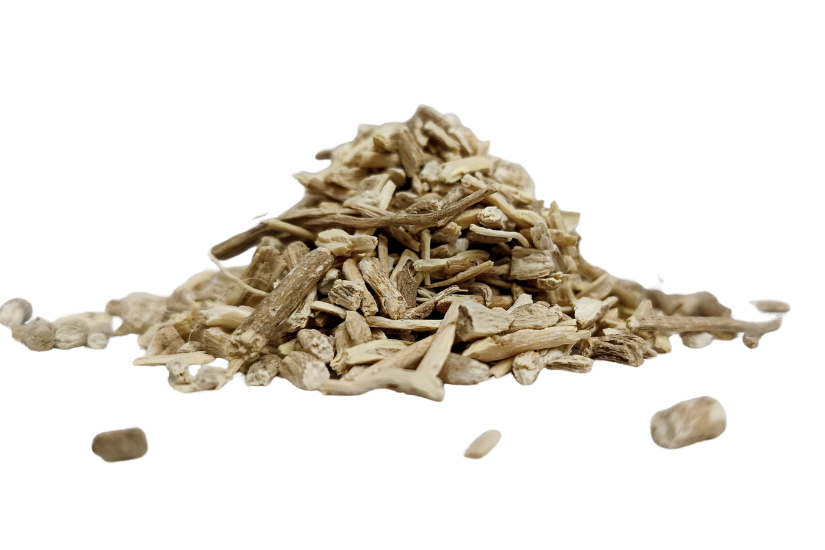
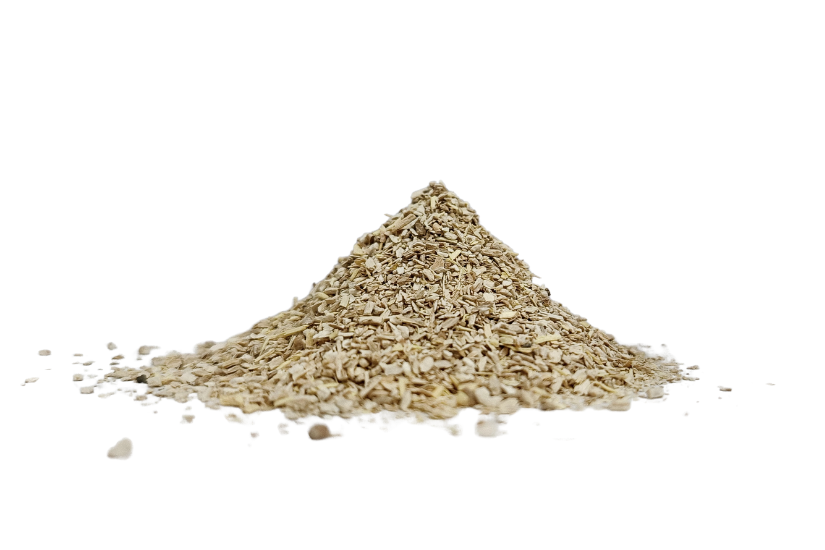
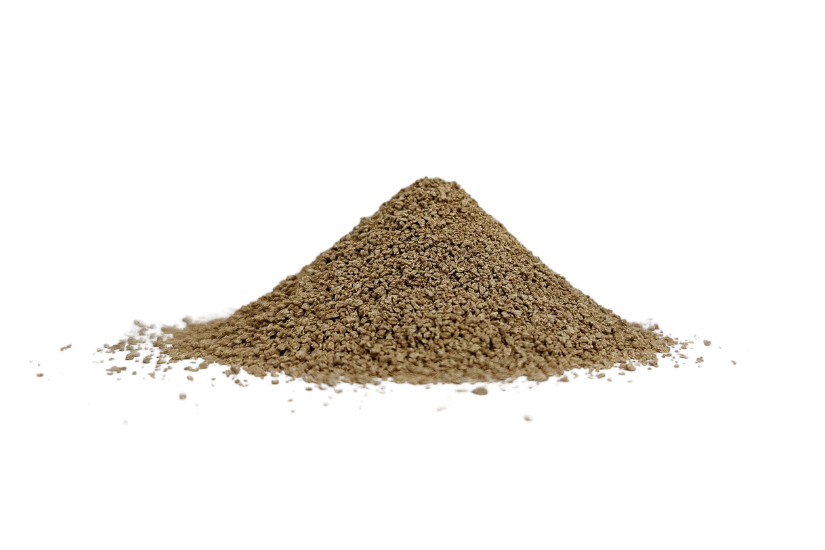
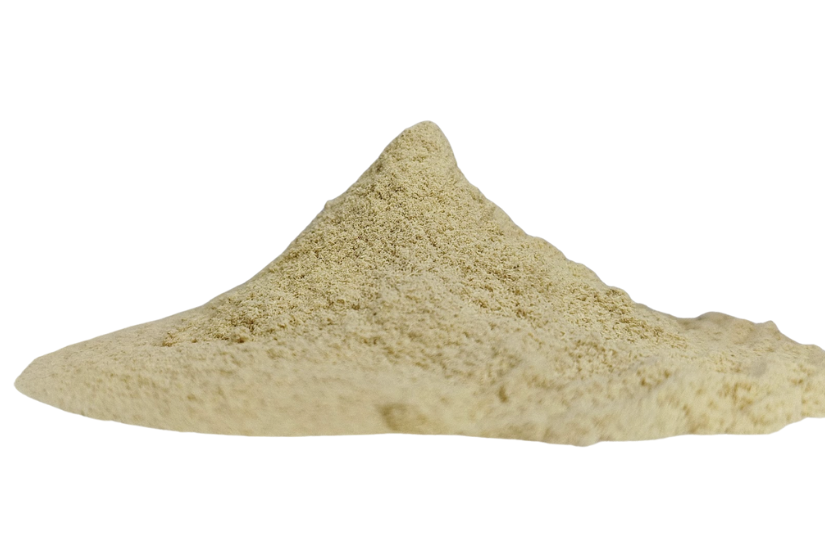
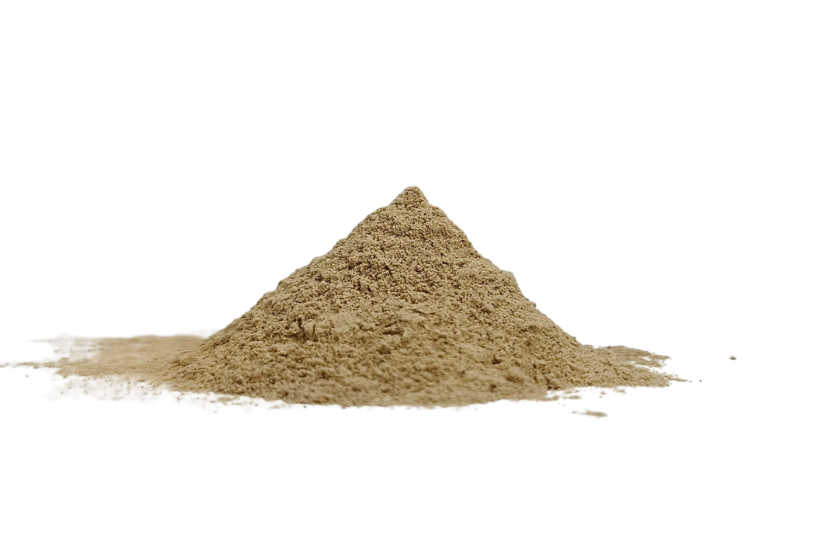
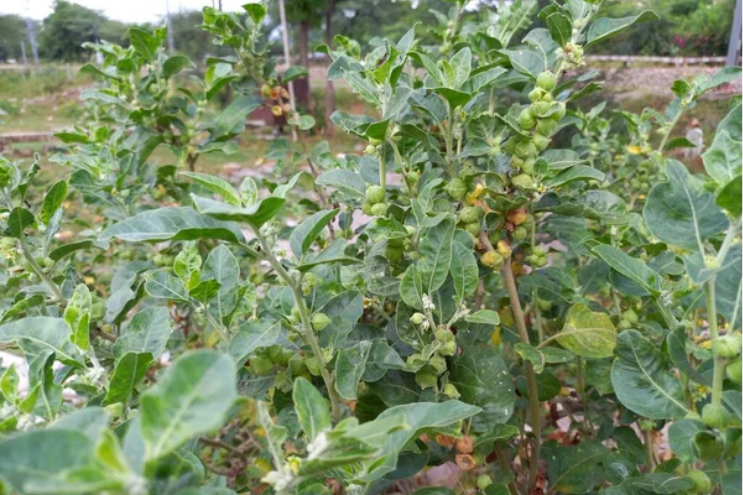
Ashwagandha has been cultivated in India for centuries. The roots have an earthy aroma and are central to classical Ayurvedic texts. Withanolides are its signature constituents, alongside alkaloids and sitoindosides. Plants are grown to full maturity before harvest and the roots are cleaned, sliced, dried, and milled. And origin, season, and post-harvest handling influence aroma and chemistry. Uniform particle size supports consistent blending across formats.

Ashwagandha is a short-season crop planted after the late monsoon and harvested 150 to 180 days later when the leaves dry and berries turn red. An acre yields 120 to 400 kilograms of dried roots and 20 to 30 kilograms of seed. Roots are cut, dried, and sorted by size and texture. The plant requires dry conditions and is easily damaged by excess rain or poor drainage. Seedling rot and leaf spot are common. Root quality and active compounds vary by region, with desert types generally higher in withanolides than central Indian types. This makes sourcing consistent quality a challenge.
Discover the science and story behind our herbs. Enter your email to receive the Herbarium document.
From the fields where they’re grown to the shelves where you find them, every herb we use is traceable. Learn how we ensure quality, fairness, and sustainability in every step of the process from seed to ship.