Cinnamon Tea
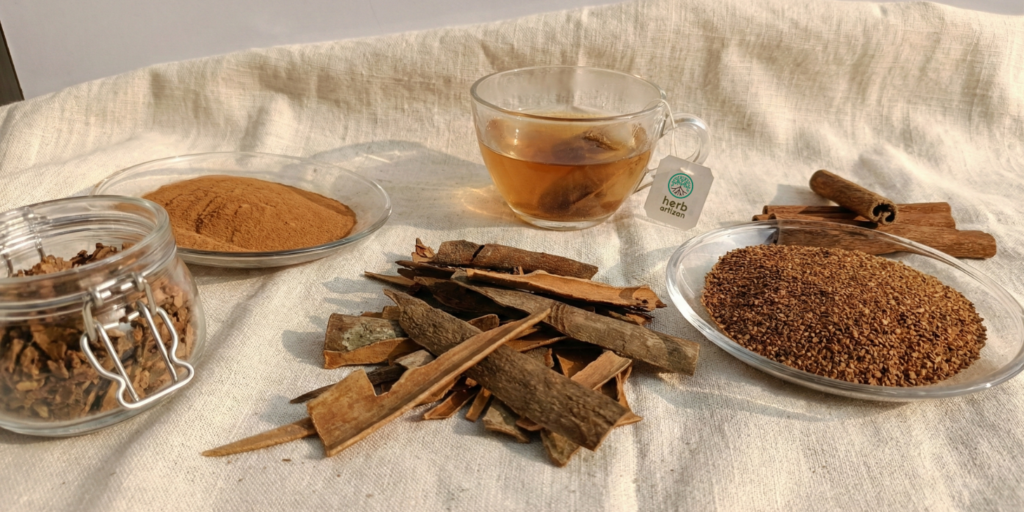
Cinnamon Tea Home A warm embrace in a cup Scientific name: Cinnamomum verum and Cinnamon cassia Part used: Inner bark Classification: Lauraceae family, which includes bay laurel, avocado, and camphor trees. Main growers: Sri Lanka, Indonesia, Vietnam, China and India Health benefits: Blood sugar management, blood pressure control, anti-inflammatory and weight management History and Nomenclature Cinnamon has a rich history dating back thousands of years. The name “cinnamon” is derived from the Greek “kinnámōmon,” which itself likely came from a Phoenician word. Various species of cinnamon are cultivated around the world, each with its own unique characteristics. Cinnamon’s allure extends far beyond its aromatic qualities. The Ancient Egyptians prized it for its antifungal and antiviral properties and used it in their mummification processes. Such was the value of this spice that it became a form of currency, sparking conflicts and shaping colonial ambitions. European powers vied for control over the cinnamon trade, with different nations competing for dominance in various cinnamon-producing regions throughout history. Health Benefits Cinnamon, derived from the inner bark of trees, has been prized for centuries for its distinctive aroma, flavor, and its remarkable health-promoting properties [1]. This warm, sweet spice is rich in bioactive compounds, including cinnamaldehyde, eugenol, and cinnamic acid, which contribute to its impressive array of potential health benefits. One of cinnamon’s most notable attributes is its ability to help manage blood sugar levels, making it particularly beneficial for individuals with type 2 diabetes or those at risk of developing the condition [2–4]*. Cinnamon may enhance insulin sensitivity and reduce blood glucose levels, potentially aiding in better glycemic control. Furthermore, the polyphenols found in cinnamon boast potent antioxidant properties, which can help protect the body against oxidative stress and the cellular damage it can cause [5]. Recent research has shed light on cinnamon’s potential role in weight management. A comprehensive systematic review analyzing 12 randomized clinical trials, encompassing 786 participants, revealed promising results. The study demonstrated a notable reduction in body weight among subjects consuming cinnamon, with an average decrease of 1 kg. Furthermore, the research indicated a reduction in Body Mass Index (BMI) of 0.51 kg/m² [6]. Heart health is another area where cinnamon shows promise. Some research indicates that cinnamon may help reduce risk factors for cardiovascular disease, including lowering cholesterol and triglyceride levels [7,8]. While these potential benefits are certainly encouraging, more research is needed to validate these health benefits. Blood Sugar Control Blood Pressure Control Anti-inflammatory Weight Management Reduced microbial contamination Maintained sensory profile Export-ready packaging Extended preservation Preserved botanical essence Odor protection during transit Table 1 Evidence-Based Pharmacological Activities of Cinnamon Pharmacological Activity Possible Mechanism Evidence Rank Ref. Blood sugar management Enhances insulin sensitivity and glucose uptake 4 [3,4,9–11] Blood pressure control Increase nitric oxide production, which helps dilate blood vessels and improve blood flow, 4 [12–14] Anti-inflammatory Inhibits production of pro-inflammatory cytokines like C-reactive protein, malondialdehyde and IL-6 3 [5,7] Weight management Boosts metabolism and controls appetite 4 [6,14–16] Evidence Rank: 1 = Limited clinical evidence; 5 = Strong evidence from multiple randomized trials Flavor Profile Sweet and Warming: Cinnamon tea offers a gentle sweetness with a comforting warmth that envelops the palate, making it an ideal beverage for relaxation. Delicate Spiciness: Cinnamon imparts a complex spiciness to the tea, adding depth to its flavor profile. Floral Undertones: A light, almost floral quality emerges in the tea, contributing to its nuanced flavor profile and enhancing its overall sophistication. Earthy Notes: The tea carries a mild woody and earthy character that grounds the sweeter elements, creating a well-balanced infusion. Refined Taste: Cinnamon verum tea presents a milder flavor compared to Cinnamon cassia Quality Indicators Appearance: High-quality cinnamon tea should have a light amber to golden color when brewed. The tea bag should contain visible, thin strips of light brown cinnamon bark. Aroma: The tea should emit a sweet, warm fragrance with complex notes that may include subtle floral or citrusy hints. The scent should be inviting without being overpowering. Taste: When sipped, the tea should offer a delicate, sweet cinnamon flavor without any harsh bitterness or intense heat. The taste should be smooth and lingering. Texture: The brewed tea should feel smooth on the palate, without any grittiness. Ingredients: Tea bags ideally should only contain cinnamon. Check for the absence of artificial flavors. Origin: The cinnamon used in the tea should come from reputable cinnamon-producing regions to help ensure authenticity and quality. Coumarin Levels: While not easily detectable by consumers, Herb Artizan can provide information on the level of coumarin content in our cinnamon tea bag cuts, enabling regular safe consumption. Reference Ahmed, H.M.; Ramadhani, A.M.; Erwa, I.Y.; Ishag, O.A.O.; Saeed, M.B. Phytochemical Screening, Chemical Composition and Antimicrobial Activity of Cinnamon Verum Bark. Int Res J Pure Appl Chem 2020, 36–43, doi:10.9734/IRJPAC/2020/V21I1130222. de Moura, S.L.; Gomes, B.G.R.; Guilarducci, M.J.; Coelho, O.G.L.; Guimarães, N.S.; Gomes, J.M.G. Effects of Cinnamon Supplementation on Metabolic Biomarkers in Individuals with Type 2 Diabetes: A Systematic Review and Meta-Analysis. Nutr Rev 2024, doi:10.1093/NUTRIT/NUAE058. Zarezadeh, M.; Musazadeh, V.; Foroumandi, E.; Keramati, M.; Ostadrahimi, A.; Mekary, R.A. The Effect of Cinnamon Supplementation on Glycemic Control in Patients with Type 2 Diabetes or with Polycystic Ovary Syndrome: An Umbrella Meta-Analysis on Interventional Meta-Analyses. Diabetol Metab Syndr 2023, 15, doi:10.1186/S13098-023-01057-2. Moridpour, A.H.; Kavyani, Z.; Khosravi, S.; Farmani, E.; Daneshvar, M.; Musazadeh, V.; Faghfouri, A.H. The Effect of Cinnamon Supplementation on Glycemic Control in Patients with Type 2 Diabetes Mellitus: An Updated Systematic Review and Dose-Response Meta-Analysis of Randomized Controlled Trials. Phytother Res 2024, 38, 117–130, doi:10.1002/PTR.8026. Zhu, C.; Yan, H.; Zheng, Y.; Santos, H.O.; Macit, M.S.; Zhao, K. Impact of Cinnamon Supplementation on Cardiometabolic Biomarkers of Inflammation and Oxidative Stress: A Systematic Review and Meta-Analysis of Randomized Controlled Trials. Complement Ther Med 2020, 53, doi:10.1016/J.CTIM.2020.102517. Mousavi, S.M.; Rahmani, J.; Kord-Varkaneh, H.; Sheikhi, A.; Larijani, B.; Esmaillzadeh, A. Cinnamon Supplementation Positively Affects Obesity: A Systematic Review and Dose-Response Meta-Analysis of Randomized Controlled Trials. Clinical Nutrition 2020, 39, 123–133, doi:10.1016/J.CLNU.2019.02.017. Sarmadi, B.; Musazadeh, V.; Dehghan, P.; Karimi, E. The
Coming Soon

Discover Herb Artizan’s quality standards supported by in-house ISO 17025 certified testing and four testing pillars.